
The Business Principal Report (BPR) helps businesses assess a principal's personal credit history when there is a legitimate business need related to a consumer-initiated business transaction. This guide explains each section of the report, what information it contains, and how to interpret the data included.
What Is a Business Principal Report?
A Business Principal Report (BPR) provides access to a business principal's consumer credit information to help support business credit decisions when there is a legitimate business need connected to a consumer-initiated business transaction. The report is provided through Equifax and includes consumer credit history, FICO® Risk Scores, ACROFILE®, ACROFILE Plus™, and Identity Scan™ information.
Understanding Each Report Section
FICO® Risk Score
The FICO® Risk Score provides an indication of a consumer's credit risk based on information contained within their credit profile.
What You'll Typically See
- FICO® Risk Score
- Risk classification
- Score factors that may influence the score
- Credit-related indicators
Why It Matters
The score helps organizations evaluate overall credit risk and supports informed business decision-making.

Identity Scan™
Identity Scan™ helps verify an individual's identity using information associated with their credit profile.
What You'll Typically See
- Identity verification indicators
- Address history
- Name variations
- Potential identity discrepancies
- Publicly available identifying information
Why It Matters
Identity Scan™ can help identify inconsistencies that may require additional review before a business decision is made.
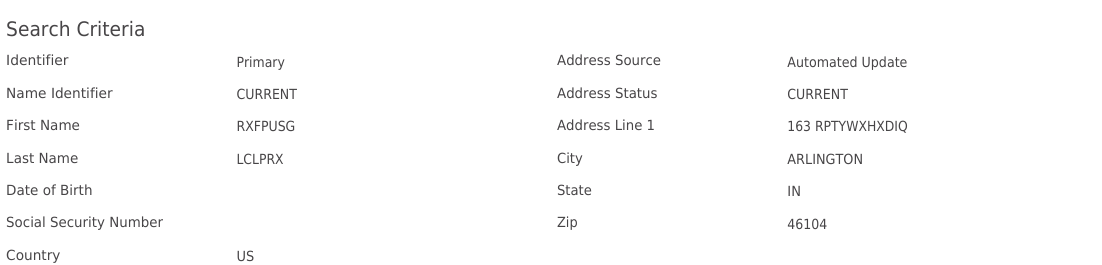
Identification Information
This section contains basic identifying details associated with the individual.
Information May Include
- Full name
- Date of birth
- Current address
- Previous addresses
- Contact information (when available)
- Social Security Number indicators or masked identifiers
Why It Matters
This information helps confirm the identity of the business principal being evaluated.
Employment Information
Employment data provides information related to an individual's reported employment history.
Information May Include
- Current employer
- Previous employers
- Employment dates
- Position or title (when available)

Why It Matters
Employment history may provide additional context regarding financial stability and professional background.
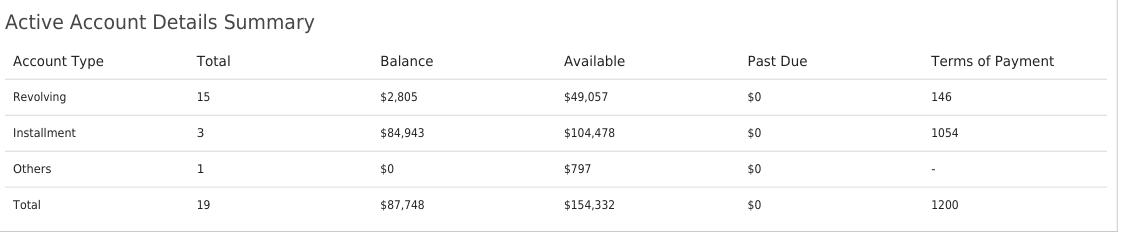
Credit Summary
The Credit Summary provides a high-level overview of the individual's credit profile.
Information May Include
- Total number of accounts
- Open accounts
- Closed accounts
- Revolving credit accounts
- Installment accounts
- Mortgage accounts
- Overall credit utilization indicators
Why It Matters
The summary offers a quick snapshot of the consumer's overall credit profile.
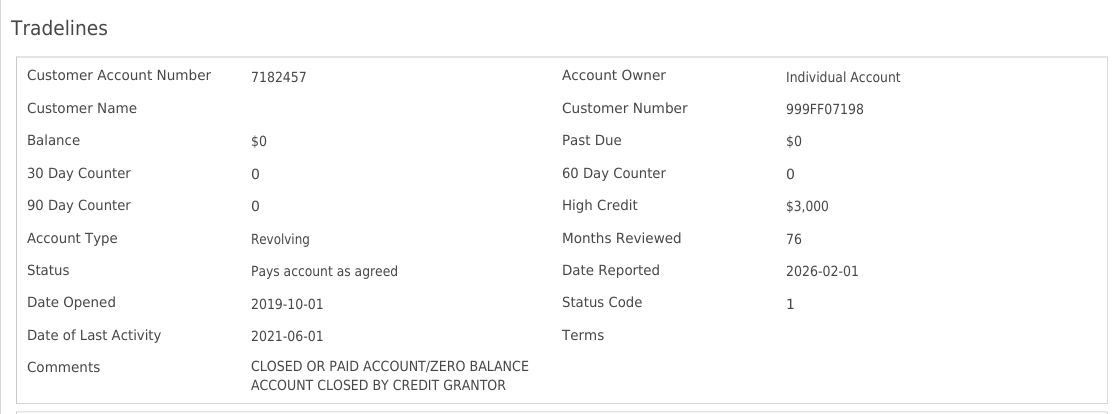
Payment History
Payment History shows how credit obligations have been managed over time.
Information May Include
- Current payment status
- Historical payment trends
- Delinquencies
- Late payments
- Account status details
Why It Matters
Payment history is one of the key indicators used to evaluate credit behavior and repayment patterns.
Collections
The Collections section identifies debts that have been placed with collections agencies.
Information May Include
- Collection agencies
- Collection balances
- Dates reported
- Collection account status
Why It Matters
Collection activity may indicate past or unresolved credit obligations.
Public Records
Public Records contain court-filed and legally reported financial events.
Information May Include
- Bankruptcies
- Judgments (where applicable)
- Liens (where applicable and legally reportable)
- Other public record filings
Why It Matters
Public records can provide important insight into significant financial events or legal proceedings.
Credit Inquiries
The Inquiries section shows requests made to access the consumer's credit file.
Information May Include
- Inquiry date
- Inquiry type
- Organization requesting access
Why It Matters
Frequent inquiries may provide additional context about recent credit activity.